Beyond Good: How Flavor Pairing Unlocks Culinary Magic
Ever bitten into a dish where every single ingredient just *sang*? Where flavors didn’t just coexist, but danced together in a perfect, harmonious symphony? It’s not luck, and it’s certainly not magic (though it often feels like it!). You’ve just experienced the incredible power of **food pairing and flavor combinations.**
This isn’t about simply liking two ingredients together. This is about understanding *why* certain flavors are destined to be together, and how you can wield this knowledge to transform your everyday cooking into something truly extraordinary.
# What’s the Big Deal About Flavor Pairin
Think of it this way: anyone can play a few notes on a piano. But a composer understands harmony, counterpoint, and how different notes create different emotions. Flavor pairing is your culinary superpower, turning you from a cook into a flavor architect.
It’s the secret weapon of top chefs, sommeliers, and even your grandma (who probably intuited it without calling it “molecular gastronomy”). It helps you:
• **Elevate Simple Ingredients:** A humble tomato becomes transcendent with fresh basil and a drizzle of balsamic.
• **Create Unforgettable Experiences:** A perfectly paired dish sticks in your memory long after the last bite.
• **Boost Your Confidence:** No more guessing games! You’ll understand the “why” behind deliciousness.
• **Unlock New Dimensions of Taste:** Discover combinations you never dreamed possible.
# The Two Pillars of Pairing: Complementary & Contrasti
At its heart, flavor pairing boils down to two main approaches:
1. **Complementary Pairing (The “Like Attracts Like” Theory):**
This is when ingredients share similar flavor compounds or profiles, enhancing each other’s inherent deliciousness. Think of a rich, creamy sauce paired with a buttery pasta – both contribute to a luscious, satisfying mouthfeel and similar underlying notes.
* **Examples:** Vanilla & caramel, mushroom & earthy herbs (thyme, rosemary), chocolate & coffee.
2. **Contrasting Pairing (The “Opposites Attract” Principle):**
Here, ingredients with very different flavor profiles come together to create balance and excitement. One element cuts through the richness of another, or provides a surprising burst that awakens the palate.
* **Examples:**
* **Sweet & Sour:** Lemon meringue pie, pineapple on pizza (don’t @ me!).
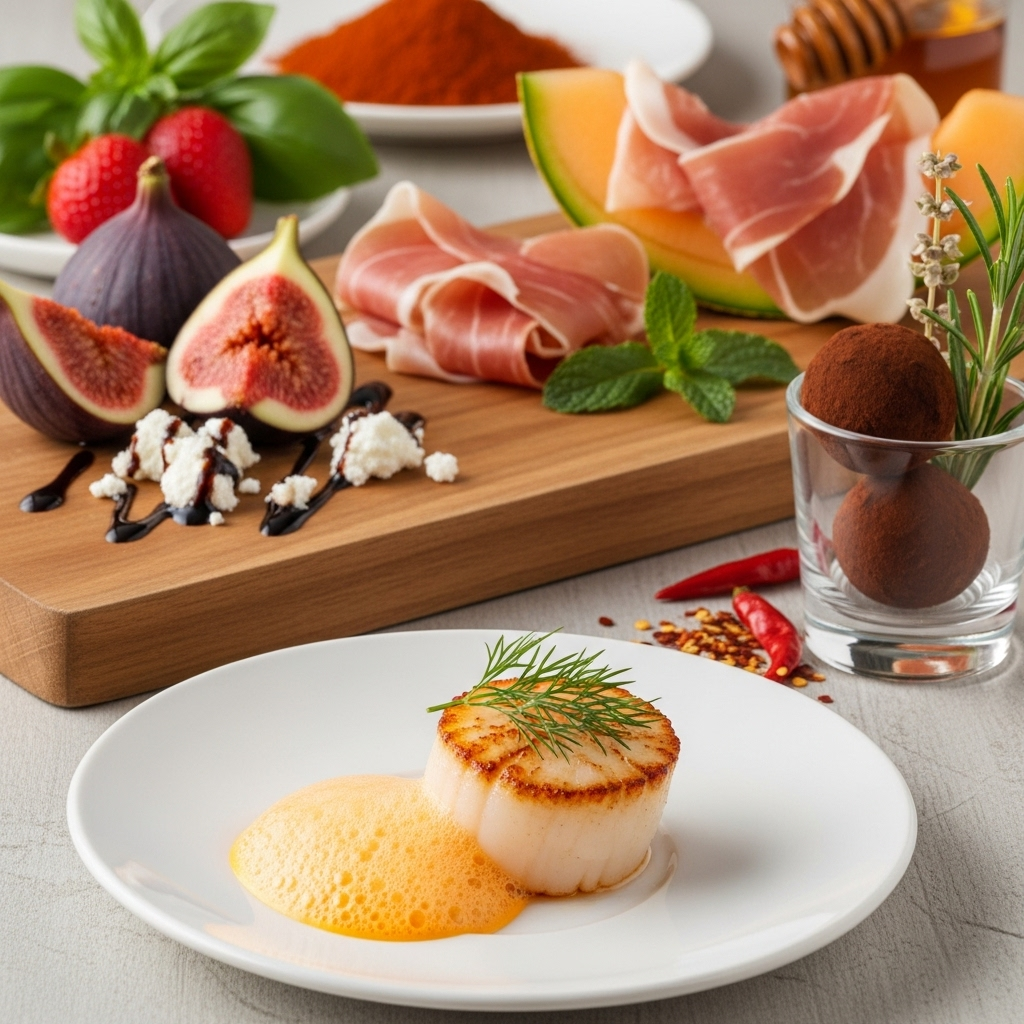
* **Rich & Acidic:** Cheese and grapes, fatty pork belly with apple sauce, a creamy soup with a squeeze of lemon.
* **Spicy & Cooling:** Indian curry with raita, chili with sour cream.
* **Bitter & Sweet:** Dark chocolate with orange zest, coffee with sugar.
There’s even a fascinating (and sometimes controversial) concept called **molecular pairing**, which suggests that ingredients with shared aromatic compounds will naturally pair well, regardless of how “different” they might seem. This is why things like chocolate and blue cheese, or strawberry and black pepper, can work so beautifully!
# Your Actionable Guide to Becoming a Flavor Archite
Ready to start building your own flavor masterpieces? Here’s how:
1. **Start with the Classics:** Don’t reinvent the wheel immediately. Understand *why* tomato and basil, cheese and wine, or coffee and chocolate are timeless. What’s the complementary or contrasting magic at play?
2. **Think Beyond Taste: Consider Texture & Temperature:**
* **Texture:** Crunchy with creamy (nuts on soup), soft with crisp (crispy skin on fish).
* **Temperature:** Hot with cold (warm apple pie with vanilla ice cream), cool with spicy.
3. **The Pillars of Balance: Acid, Fat, Salt, Sweet:** These are your fundamental tools.
* **Acid (Lemon, Vinegar, Citrus):** Cuts richness, brightens flavors, adds zest.
* **Fat (Butter, Oil, Cream, Avocado):** Carries flavor, adds richness and mouthfeel, mellows heat.
* **Salt (Sea Salt, Soy Sauce, Miso):** Enhances all other flavors, balances bitterness.
* **Sweet (Sugar, Honey, Fruits):** Balances bitterness, heat, and acidity.
4. **Dare to Experiment (Sensibly!):**
* **Take a familiar base** (e.g., roasted chicken, plain pasta).
* **Introduce one new, unusual flavor element.** What happens?
* **Examples to try:** Strawberry and black pepper, chocolate and balsamic vinegar, olive oil with vanilla ice cream, rosemary with grapes.
5. **Taste, Adjust, Repeat:** This is the golden rule. As you combine ingredients, always taste. Is it missing brightness? Add a squeeze of lemon. Too bland? A pinch of salt. Too rich? A tangy element. Your palate is your best guide!
# Your Kitchen Awaits Its Next Masterpie
Understanding flavor pairing isn’t just about making your food taste better; it’s about making your cooking journey more exciting, more intuitive, and ultimately, more delicious. It’s about developing your palate, trusting your instincts, and truly enjoying the art of eating.
No more bland meals, no more “something’s missing” moments. Just pure, unadulterated flavor joy.
—
Ready to unlock more culinary secrets and elevate your everyday cooking? Hit that ‘Follow’ button! We’ll be sharing more tips, tricks, and delicious inspiration to help you embark on this incredible flavor adventure. What’s *your* go-to unexpected pairing? Share it in the comments below!